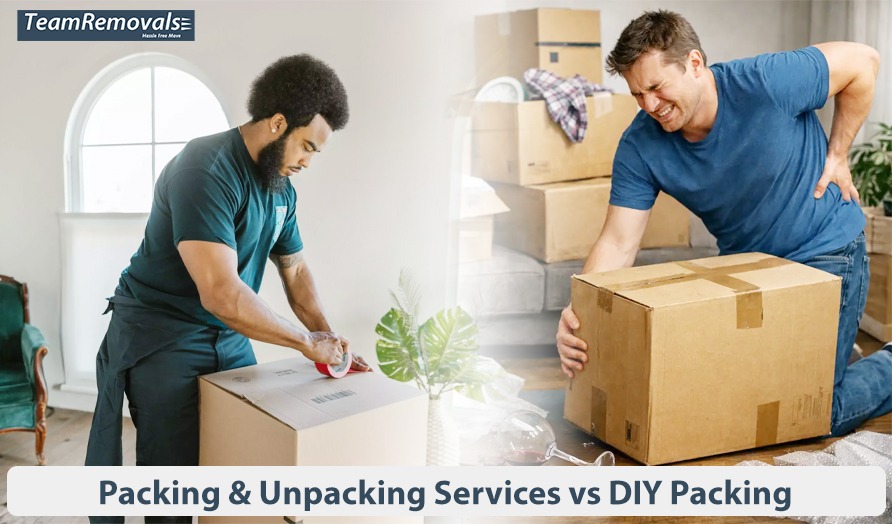
Most people pause because they don’t clearly see what packing & unpacking services actually change. DIY packing feels manageable at first. A few boxes in the evening. Some work over the weekend. On paper, it sounds simple. What most people don’t realise is that packing doesn’t stay contained. It spreads into daily routines, work hours, and mental space. The move begins controlling your time well before moving day — and often keeps doing so long after. That’s where the real comparison begins. Not between effort levels, but between how long the move stays unfinished in your life.
DIY Packing: What You’re Really Working
DIY packing usually starts with momentum. Storage items go first. Seasonal things. Items you won’t miss for a while. Progress feels real, and that builds confidence. The difficulty begins when packing overlaps with everyday life. You still need clothes, chargers, kitchen items, and work setups. Packing stops and restarts. Boxes are reopened because something essential was packed too early. Other items are packed twice because priorities change.
This isn’t poor planning. It’s reality.
DIY packing happens in pieces. Each break adds new decisions. Over time, energy drops. Focus fades. By the time moving day arrives, packing may be done, but the process? It has already taken more time and attention than expected. DIY packing isn’t physically difficult. It’s mentally draining. But not with packing & unpacking services. Let’s know how to pack quickly and efficiently.
What Packing & Unpacking Services Actually Include
Choosing packing & unpacking services isn’t about handing off responsibility. It’s about removing uncertainty.
What’s included goes far beyond labour:
- Purpose-grade materials chosen for strength and consistency.
- A packing sequence is planned before the first box is filled.
- Techniques that prevent re-handling later.
- Unpacking that restores daily use, not just clears boxes.
The key difference is that packing becomes a contained stage, not an ongoing task that competes with work, family, and rest.
The Techniques That Makes 100% Differance
Professional packing & unpacking services don’t look rushed. It looks steady. That steadiness comes from technique. Items are packed to stay in place, not just to fit. Padding is used to stop movement, not just to add softness. Weight is balanced so boxes can be stacked without crushing the ones below. This is why packing your fragile items professionally focuses on limiting movement. Items break because they move inside boxes, not because they lack padding.
Another difference is grouping. Items are packed by function and priority, not only by room. Things needed early are packed together. Items that belong to one setup stay linked. This reduces box reopening and slows down unpacking decisions later. This approach explains A to Z packing from heavy to packing fragile items without rushing — by reducing rework.
The Materials Difference: Why DIY Substitutes Don’t Behave the Same Way
DIY packing relies on what’s available. Boxes were collected from different places. Mixed sizes. Mixed strength. Padding made from towels or clothes. Professional packing & unpacking services use materials that behave predictably:
- Double-walled cartons that hold shape when stacked.
- Consistent box sizes that distribute weight evenly.
- Cushioning that compresses without shifting.
- Furniture-grade protective wraps that reduce friction and pressure.
During transport, boxes are stacked, lifted, and slightly shifted. When materials respond unevenly, problems appear later — often during unpacking. Predictable materials reduce surprises. That alone changes how a move feels.
Furniture Packing and Unpacking: Why It’s Never Just Wrapping
Furniture is often treated as a single task in DIY moves. Wrap it. Move it. Unwrap it.
In practice, furniture packing and unpacking involve several layers: Surface protection to prevent rubbing. Stress control at joints and corners. Hardware management to avoid lost parts. Alignment protection so reassembly stays smooth.
DIY methods often protect surfaces but overlook structural stress. That’s why reassembly feels harder than expected. Screws don’t line up easily. Components shift slightly. Small issues do need time. But Professional packing already knows how furniture behaves during lifting, transport, & till reassembly. It’s not just the wrapping part.
Unpacking: The Deciding Factor Too
Most moves don’t feel stressful on moving day. They feel stressed afterwards. DIY unpacking stretches because priorities aren’t clear. Boxes are labelled, but not sequenced. Essentials are spread across rooms. Fatigue sets in, and unpacking becomes something to deal with later. Professional unpacking works with function in mind. Kitchens are usable early. Bedrooms are set up first. Work routines are restored quickly. Packing materials are removed right away.
This is where packing & unpacking services quietly make the biggest difference. The move stops occupying your attention. Team Removals Canada treats unpacking as recovery, not just completion. That difference is hard to miss.
6 Strong Reasons Why DIY Can’t Realistically Feel the Same
Even with care, DIY packing has limits:
- Materials vary in strength and size.
- Packing is interrupted again and again.
- Decisions shift as energy drops.
- Unpacking happens when motivation is lowest.
- You can match effort.
- You can’t match conditions.
That’s the honest difference.
Who Packing & Unpacking Services Are Actually For
These services aren’t needed for every move. They may not suit:
- Small or single-room relocations.
- Moves with no time pressure.
- Situations where disruption doesn’t matter.
They are valuable when:
- Work or family routines can’t pause.
- Storage habits are mixed and layered.
- You want the move to end, not linger.
In those cases, working with experienced teams at Team Removals Canada isn’t about stacking up. It’s about shortening disruption with clear practical steps.
Let’s Look At the Cost Factor
When people hesitate over packing & unpacking services, it’s rarely about the number itself. It’s about not knowing what that number is tied to. Cost is shaped by practical factors, not assumptions. Things like how many rooms need packing, how much furniture requires protection, and how many fragile items need stabilising. So, a home with fewer rooms but complex storage can take more time than a larger but simpler layout. That’s why customised quoting is recommended so that you get the real value. Not overpay.
Another factor is scope. Some people want everything packed and unpacked. Others prefer to pack non-fragile items themselves and leave only breakables, furniture, or key rooms to the professionals. Both are valid, and both change what’s included.
What matters most to many households isn’t the service itself, but cost control. Knowing that packing will finish within a defined window. Knowing unpacking won’t drag on for weeks. Knowing there won’t be repeated trips for extra boxes or last-minute fixes. That’s why a quote isn’t just about price. It’s about clarity — what’s covered, what isn’t, and how much disruption is removed from your move.
A short conversation with Team Removals Canada helps map that out clearly, so you’re deciding with full context rather than assumptions.
Wrapping Up
This choice isn’t about whether you can pack.
It’s about how long packing continues to affect your days.
If settling in quickly matters more than stretching unpacking over weeks, a practical conversation with Team Removals Canada. It can help you decide what level of support fits your move. Keep the hassle away with the best packing & unpacking services.
Start a conversation: +1-6479322202 info@teamremovals.ca